
The Internet of Things is an emerging technology that offers enormous possibilities for data exchange and improvement of processes associated with Digital Transformation, while at the same time raise security challenges that we cannot ignore if we want to build trust within this ecosystem of connected devices. How to get the most out of this disruptive technology without compromising security will be discussed in this article.
From 2020 to 2026 a gradual growth in the
number of total IoT connections is forecast (from 1974 million in 2020 to 8173
million in 2026) reaching in 2025 to predict the existence of 75 billion
devices connected to the Internet of Things.
In line with this trend, we find a correlative
investment in security, whose purpose of building trust in these environments
would reflect an increase from 3817 million in 2020 to 16.674 million in 2026
for the securitization of IoT environments.

Figures that denote both the advantages of using these IoT-connected objects in communications and the strategic importance of securitization them for reliable communications and secure management of shared data.
What types of devices use IoT technology?
Within this ecosystem of IoT connected devices we find:
Smart Devices
- Smart meters such as water meters.
- Smart devices oriented to micro-payments where 5G plays a key role.
- Smart vehicles, capable of avoiding
60% of traffic accidents if a seamless 5G network is in place.
It is noted that the global connected car
market will reach $191.83 billion by 2028.
The main security challenges faced by these
devices are the protection of their identity and digital certificate keys for
their communications, valid connectivity, reliable mutual authentication,
secure data exchange and effective remote access.
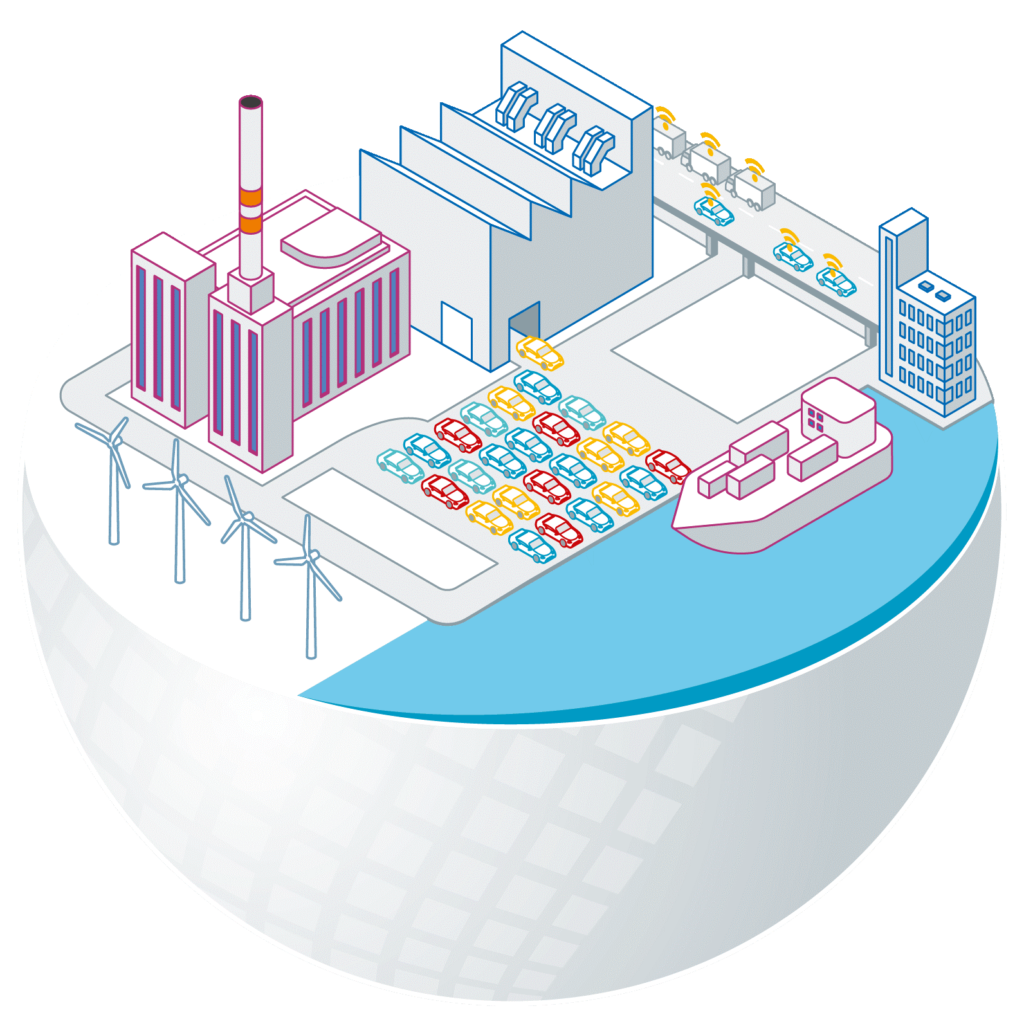
Smart Systems
- Smart Home: communications between devices for a
friendlier home that promotes energy savings and sustainability.
- Smart Production: as a fundamental
part of Industry 4.0 and whose Global Smart Production Market size is expected
to reach 589.98 billion dollars by 2028. Currently highlighting that M2M
connections supported by IoT applications will account for more than half of
the world’s 28.5 billion connected devices.
- Smart Infrastructure: The global Smart
Infrastructure market will exceed $434.16 billion by 2028 (already in 2020,
North America was the largest market with $26.5 billion).
In terms of security, these smart systems must
have adequate protection for their identity and connectivity, as well as proper
mutual authentication between ecosystems, systems and devices, along with
secure data exchange, reliable remote access, compatibility and regulatory
compliance.
Smart Ecosystems
- Smart City: huge IoT Ecosystems that have a special
set of requirements for Integration and Interconnectivity.
- Smart Mobility: where it is worth
noting that 50% of vehicles in the US and EU roads will be connected vehicles
by 2025.
- Smart Logistics: at this point we
can highlight that it is estimated that around 25% of supply chain decisions
will be carried out through Intelligent Perimeter Ecosystems and that by 2026,
75% of large companies will have intelligent intralogistics robots.
At this point it is also essential to invest
in identity protection, optimal connectivity, reliable mutual authentication of
ecosystems, systems and devices, secure data exchange, remote access, as well
as aligning with compatibility and regulatory compliance models.
Security Challenges for the IoT Industry
For IoT technology to be effective, it is a
must considering it within a dynamic environment of Digital Transformation and
continuous data analysis.
Securing secure IoT device identities and
preventing intellectual property theft and other associated cyber-attacks is
critical to its success, while aligning to relevant security and compliance
models.
Of course, not forgetting reliable data
communications and exchanges and the robustness of 5G networks.
In short, both manufacturers and users of IoT
devices must implement a secure and reliable infrastructure to protect their
data, authenticate users, ensure key management and access, while monitoring
and minimizing potential risks and threats.
How can I protect my IoT infrastructure?
With secure and robust technology for a
Digital Transformation with guarantees: through the implementation
of a HSM (Hardware Security Module + Quantum Security Cryptography + Key
Injection). Accompanied by key management, PKI and file encryption.
Protecting device identities: we will implement a Hardware Security Module for key injection along with
PKI solutions for key management and code signature.
With IoT cloud security: for which we will employ an HSM accompanied by robust cryptography and
management through quantum security along with POS key injection, migration and
tokenization. As well as key management through a PKI.
Data protection: where PKI will ensure key management and software file encryption.
If you need the most competitive solutions and
products on the market for holistic protection and robust security for your IoT
connected devices, Utimaco is your technological ally!
Signed by
Volker Gerstenberger
Global Marketing Director Utimaco